
Most Investors Lose Money Before They Ever Close a Deal
Bad underwriting is the #1 reason multifamily investors overpay, misjudge cash flow, or walk into deals that never had a real path to their target returns. This roadmap shows you the exact sequence professional investors use — so you underwrite it right the first time.
Know What You're Building Toward
Before you underwrite a single deal, lock in three things: the property type and class you're targeting (A, B, C or D-Class, including value-add, Section 8, workforce and government-assisted housing, or student housing), your target going-in cap rate range, and your target cash-on-cash return.
Skipping this step is the most common reason investors underwrite deals that look good on paper but don't match their actual goals — a 6% cap rate Class A asset and a 9% cap rate Class C value-add play demand completely different strategies, capital, and risk tolerance. Decide what you're building toward first.
Pick the Market You'll Actually Invest In
Once your strategy is set, research the markets that fit it. The core factors that drive a market's durability for multifamily: rent growth trends over the last several years, job and population growth, the supply pipeline (units under construction that will compete for your tenants), the landlord-tenant law environment, and school and crime data as they shape tenant demand.
Build a Deal Flow Pipeline
Deals come from a handful of sourcing channels: broker relationships (the most consistent source of on-market and pocket listings), off-market and direct outreach to owners, public marketplaces like LoopNet and Crexi, and investor networking groups where deals are often shared before they ever hit a listing service.
Treat deal flow as a pipeline you feed continuously — most leads won't pencil out, so volume and a consistent screen are what surface the few worth underwriting in earnest.
Turn a Deal Into a Business Plan
This is where your strategy, market, and the specific deal come together into a real underwriting model — and the workbook output is the business plan for that property. Choose the financing path that matches the deal you're evaluating.
Stress-Test the Numbers
Before you commit capital, run the seller's documents through the tools that sharpen your underwriting and expose the gaps a proforma hides.
Run the Deal Like a Business
After closing, the deal becomes an operating business — track performance against your underwriting, manage the portfolio, and keep your references within reach.
Built by operators, used daily.
A working room of independent investors pressure-testing deals before capital commits. Not a forum — a desk of peers.
A living library of LOIs, operating agreements, and underwriting templates. Updated as the market moves, not once a year.
New financing, loan assumption, and full-community guidance. The same math a full model starts with, built to be defended.
A line-by-line walkthrough of every input and formula. Know exactly which assumption drives each output — and why.
See the deal before you own it.
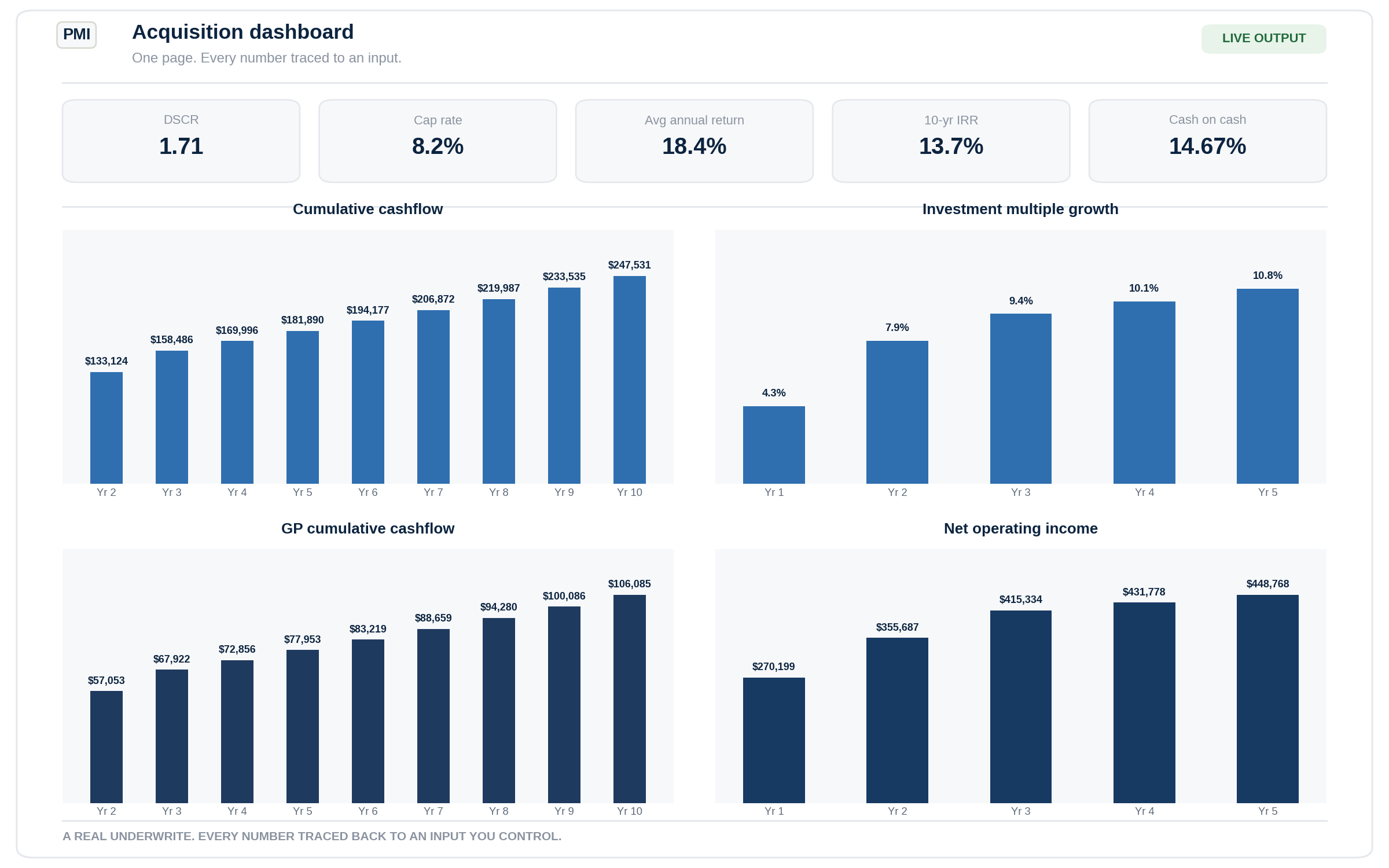
Every underwrite ends in the same place: a one-page Dashboard showing cash-on-cash, cap rate, DSCR, IRR, and average annual return — color-coded against the thresholds a lender or partner will actually hold you to. This is the output, not a mockup.
Ready to start with Step 4?
Underwriting is the paid entry point into the toolset — pick a license and turn your next deal into a business plan.